
An Alphabet Story XLVII
Nile’s Last Kiss: Kingdom in a cup and love in the shape of the sea.

Nile’s dusk had come like an accusation, the light pooling across Alexandria’s stone as if the city itself had finally understood the arithmetic of loss.
On her pallet by the palace window Cleopatra traced the rim of a tiny sealed vial…the perfumer’s gift she had kept always near, labeled only with a smudge of ink and the memory of Mark Antony’s laugh.
Pomegranate wine sweated on a silver plate and the scent of myrrh was braided through the curtains, but what filled the room was a soft, animal grief she could not name aloud.
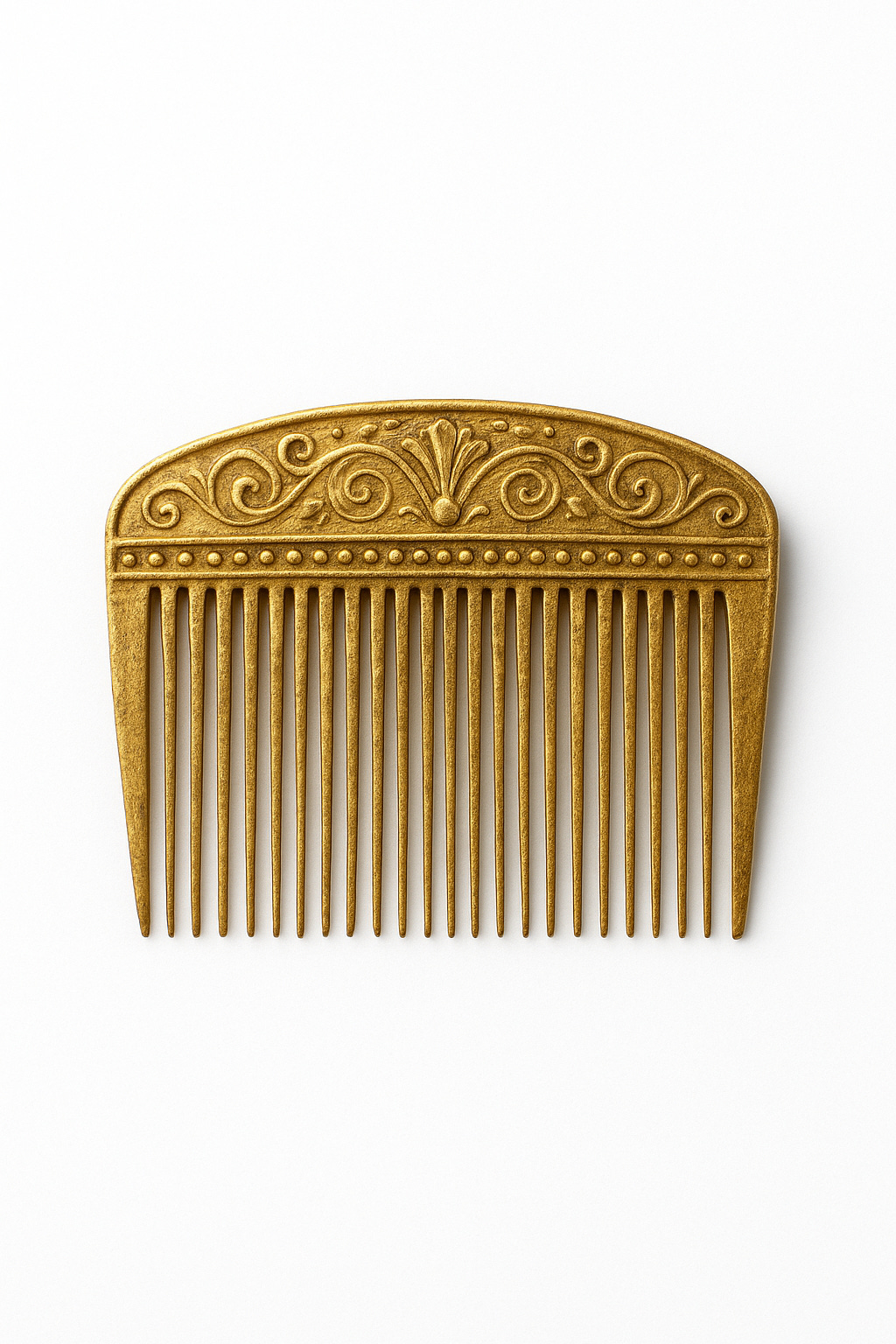
Quiet hands…the old woman’s and her own…folded white linen around a gold comb and a lock of hair, a domestic liturgy of endings that refused the public spectacle.
Rest had once been for other people…her sleep now came in sharp slashes like a blade, each breath a counted measure against the approaching footsteps of Rome.
She dressed for no parade but for herself, silk on skin and kohl under her eyes, because even in a final act she wanted to be chosen not pitied.
The small vial warmed against her palm and inside it the perfume smelled not of blossoms but of iron and riverweed, a scent she had sometimes thought tasted like Antony’s forehead.
Upon the balcony the city hummed with rumor, and a courier’s whisper reached her ear…Octavian’s men would come before dawn, and with them the slow theater of humiliation.
Voices of memory rose: Antony’s promises, the curve of his mouth when he spoke new cities into being, the peculiar tenderness with which he had held her hand in the dark.
When the first soldier came to the gate she had practiced a thousand exits and one performed refusal, and she watched the shadow of their spears fall like dry leaves across the mosaic.
Xenial offers of safe passage, exile, a performance to decorate a Roman triumph…were rehearsed in the mouths of envoys, words softened with the sugar they always wore.
Yet she had no appetite for exile; a woman who had learned to speak with crowns would not live as an anecdote in a foreign court.
Zealous friends urged spectacle; the Egyptian priests whispered ancient formulas and a servant held a bowl of milk as if ritual could broker mercy.
Again she uncorked the perfumer’s vial to inhale, and the scent brought the image of Antony laughing in the amphitheater, hair wet with the sea and eyes like a lost map.
Blood began to make a slow, private claim on her palms as she rolled the thin seal between thumb and forefinger; it was cold and perfectly quiet like a river under ice.
Cleopatra had loved Antony with a commodity of reckless tenderness and now loved him as one loves a ruin…because ruins remember what once burned bright.
Dialogue with the soldier at the threshold was brief and practised; she used cadence and pity the way others used swords, and when she bade him call Octavian she smiled as if at some small joke.
Even the servants felt the change: the taps of sandals contained foreknowledge, and the lute in the corner struck a single note that split the air like a small, honest cry.
For a moment she closed her eyes and all the rooms of her life unfurled…the green of the Nile in summer, Antony’s hand over hers in the cold of winter, the city that had made her speak in seven tongues.
Grounded in choice, she lifted the vial and set it to her lips; the perfume’s sweetness buckled then into a bitterness like old iron and the taste of river-salt, and in that instant the world rearranged.
Her breath became a series of small, exquisite collapses and she thought, absurdly, of the gardens she had planted for children she would never know.
In the courtyard below a messenger screamed that Octavian had sent terms; the syllables shaped themselves as a distant tide and she let them pass without reaching.
Just before the last of the perfume slid down her throat a figure pressed to a balcony rail in the shadow…not a Roman but a young man in Antony’s livery who had once been a page, his face a ghost of complicity and love.
Kindness did not come in that room; only the geometry of endings, but the page lowered his head and in a voice like a bell said, “Do not let them fashion you into their story.”
Light left her eyes in slanting strips and visions took on a soft reversal, the courtyard becoming a sea, the sea becoming her mother’s braid, and she realized the serpent of legend could be a language made by other people.
Myriad tales would later kiss the wound and call it an asp, but here in the last loosened hour the truth was mercilessly simple: she had chosen the vial because it let her keep the story she wanted.
Not for her the parade of ropes and public dressing, she thought, as her fingers opened and let the perfumed glass fall…it shivered and slept on the rug like a small moon.
Overhead the sky blushed with the first impossible light of dawn and the city held its breath as if to listen to the sound of a queen unmaking a myth.
Perhaps Antony’s name rose in her mind because love must be honored even in self-erasure, or perhaps because a whole empire had taught her the grammar of theater; in either case she smiled, and the smile did not belong to a defeated woman.
Quivering finally, she thought of the sea again and of little nights when Antony had taught her to row until the stars blurred, and that memory steadied her like a stern hand on the tiller.
Real and rumor would fuse into legend quickly: the pressed serpent, the embroidered veil, the soldier’s report that would omit most tenderness and keep only scandal.
She felt the perfume’s work slow inside her as if a world were settling, and with the last sharp clarity she arranged the comb beside her cheek and let a single tear fall onto the sill.
Then she let her lids close and in the last bright hush she heard, not the hammer of Rome, but Antony’s voice as if carried across waves…soft, exact, the language she would choose to die by.
Under the mosaic the city would later rewrite her death as nature’s bite because myths are kinder to monuments than facts are to women.
Verdicts would be made and unmade, marble would be polished and the story would be sewn into a garment that fit the conqueror’s purpose rather than the queen’s truth.
When they found her at dawn she looked like someone who had simply gone out to meet the sea and been invited in, and the small vial lay empty at her side like a secret that would grow teeth.
Xanadu of rumor and the real geography of her grief would never sit easily together; historians would argue and poets would pick the prettier wound.
Yearning for a voice that would tell the whole of her…tender, cunning, laughable, fierce…she died with the smell of perfume and salt in her nose and the memory of a hand she could still feel on hers.
Zero pages would hold the full measure of the woman she had been; the legend would shelter some and erase others, and the small sealed vial would become both the instrument and the last, intimate protest.
Every Alphabet Story is unique from it’s predecessor so that you can read each of them as a standalone. Check in every 2 days for a fresh new story. Where will we be going next? To help keep the Alphabet Stories coming, please consider supporting below: